


ရီးယာ (ဂြိုဟ်ရံလ)
 Cassini mosaic of Rhea | |||||||||
| ရှာဖွေတွေ့ရှိခြင်း | |||||||||
|---|---|---|---|---|---|---|---|---|---|
| ရှာဖွေတွေ့ရှိခဲ့သူ | G. D. Cassini[၁] | ||||||||
| ရှာဖွေတွေ့ရှိသည့် ရက်စွဲ | December 23, 1672[၁] | ||||||||
အခြားအမည်များ | Saturn V | ||||||||
| ပါဝင်အရာဝတ္ထုများ | Rhean | ||||||||
| ပတ်လမ်း ဂုဏ်အင်များ [၂] | |||||||||
ဆီမီး မေဂျာ ဝင်ရိုး | 527108 km | ||||||||
| ပတ်လမ်း ဗဟိုကျမှု | 0.0012583 | ||||||||
ပတ်လမ်း ကာလ | 4.518212 d | ||||||||
ပျမ်းမျှ ပတ်နှုန်း | 8.48 km/s | ||||||||
| ပတ်လမ်း တိမ်းစောင်းမှု | 0.345° (to Saturn's equator) | ||||||||
| ဂြိုဟ်ရံလများ | စနေဂြိုဟ် | ||||||||
| ရုပ်ပိုင်းဆိုင်ရာ ဂုဏ်အင်များ | |||||||||
| ဒိုင်မင်းရှင်း | 1532.4 × 1525.6 × 1524.4 km [၃] | ||||||||
မျက်နှာပြင် ဧရိယာ | 7337000 km2 | ||||||||
| ဒြပ်ထု | (2.306518±0.000353)×1021 kg [၄] (~3.9×10−၄ Earths) | ||||||||
ပျမ်းမျှ သိပ်သည်းဆ | 1.236±0.005 g/cm³ [၃] | ||||||||
မျက်နှာပြင် ဒြပ်ဆွဲအား | 0.264 m/s² | ||||||||
အင်နားရှားကိန်း | 0.3911±0.0045[၅] (estimate) | ||||||||
လွတ်မြောက်အလျင် | 0.635 km/s | ||||||||
လှည့်ပတ်ကာလ | 4.518212 d (synchronous) | ||||||||
ဝင်ရိုးတိမ်းစောင်းမှု | zero | ||||||||
| Albedo | 0.949±0.003 (geometric) [၆] | ||||||||
| |||||||||
မြင်သာသော ပမာဏ | 10 [၇] | ||||||||
ရီးယာ သည် စနေဂြိုဟ်၏ ဒုတိယအကြီးဆုံး ဂြိုဟ်ရံလဖြစ်ပြီး နေအဖွဲ့အစည်းတွင် နဝမမြောက် အကြီးဆုံးဖြစ်သည်။ ယင်းသည် စီးရီးစ် ဂြိုဟ်သိမ်ပြီးလျင် ဒုတိယအသေးငယ်ဆုံး အရာဝတ္ထုဖြစ်သည်။[၈][၉] ရီးယာအား Giovanni Domenico Cassini ဆိုသူက ၁၆၇၂ ခုနှစ်တွင် ရှာဖွေတွေ့ရှိခဲ့သည်။
ဓာတ်ပုံ
[ပြင်ဆင်ရန်]-
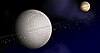 An artist's impression of Rhea's rings
 -
 Cassini color image of Rhea - large crater Powehiwehi (right center) - chasmata stretch vertically above (past crater Wakonda, near the terminator) - Onokoro Catenae (lower left).
 -
 Image of the wispy hemisphere, showing ice cliffs - Powehiwehi (upper center); chasmata stretch from upper left to right center - Onokoro Catenae (lower right).
 -
 View of Rhea's leading hemisphere with crater Inktomi and its prominent ray system just below center; impact basin Tirawa is at upper left
 -
 Enhanced-color views of Rhea taken by Cassini on 9 February 2015
 -
 Rhea's horizon viewed on 10 February 2015.


.jpg)


ကိုးကား
[ပြင်ဆင်ရန်]- ↑ ၁.၀ ၁.၁ Rhea: Saturn's dirty snowball moon
- ↑ Natural Satellites Ephemeris Service Minor Planet Center
- ↑ ၃.၀ ၃.၁ Roatsch၊ T.; Jaumann၊ R.; Stephan၊ K.; Thomas၊ P. C. (2009)။ "Cartographic Mapping of the Icy Satellites Using ISS and VIMS Data"။ Saturn from Cassini-Huygens။ pp. 763–781။ doi:10.1007/978-1-4020-9217-6_24။ ISBN 978-1-4020-9216-9။
- ↑ "The Gravity Field of the Saturnian System from Satellite Observations and Spacecraft Tracking Data" (December 2006). The Astronomical Journal 132 (6): 2520–2526. doi:. Bibcode: 2006AJ....132.2520J.
- ↑ "Saturn's satellite Rhea is a homogeneous mix of rock and ice" (2007). Geophysical Research Letters 34 (2). doi:. Bibcode: 2007GeoRL..34.2202A.
- ↑ "Enceladus: Cosmic Graffiti Artist Caught in the Act" (9 February 2007). Science 315 (5813). doi:. PMID 17289992. Bibcode: 2007Sci...315..815V. Retrieved on 20 December 2011. (supporting online material, table S1)
- ↑ Observatorio ARVAL (April 15, 2007)။ Classic Satellites of the Solar System။ Observatorio ARVAL။ 22 October 2013 တွင် မူရင်းအား မော်ကွန်းတင်ပြီး။ 2011-12-17 တွင် ပြန်စစ်ပြီး။
- ↑ မော်ကွန်းတင်ပြီးမိတ္တူ။ 23 December 2018 တွင် မူရင်းအား မော်ကွန်းတင်ပြီး။ 20 July 2018 တွင် ပြန်စစ်ပြီး။
- ↑ Emily Lakdawalla (12 November 2015)။ DPS 2015: First reconnaissance of Ceres by Dawn။ The Planetary Society။ 21 February 2018 တွင် ပြန်စစ်ပြီး။
| ဂြိုဟ်ဆိုင်ရာ ဂြိုဟ်တုများ |  | ||||
|---|---|---|---|---|---|
| အခြား ဂြိုဟ်တုများ | |||||
| အကြီးဆုံး ဂြိုဟ်တုများ (ပျမ်းမျှအချင်းဝက် ≥ ၁၀၀ ကီလိုမီတာ) |
| ||||
| |||||